Summary

HilDes delivered a fully autonomous AI voice interview platform that conducts real-time interviews, evaluates candidate responses, and provides structured scoring at scale.

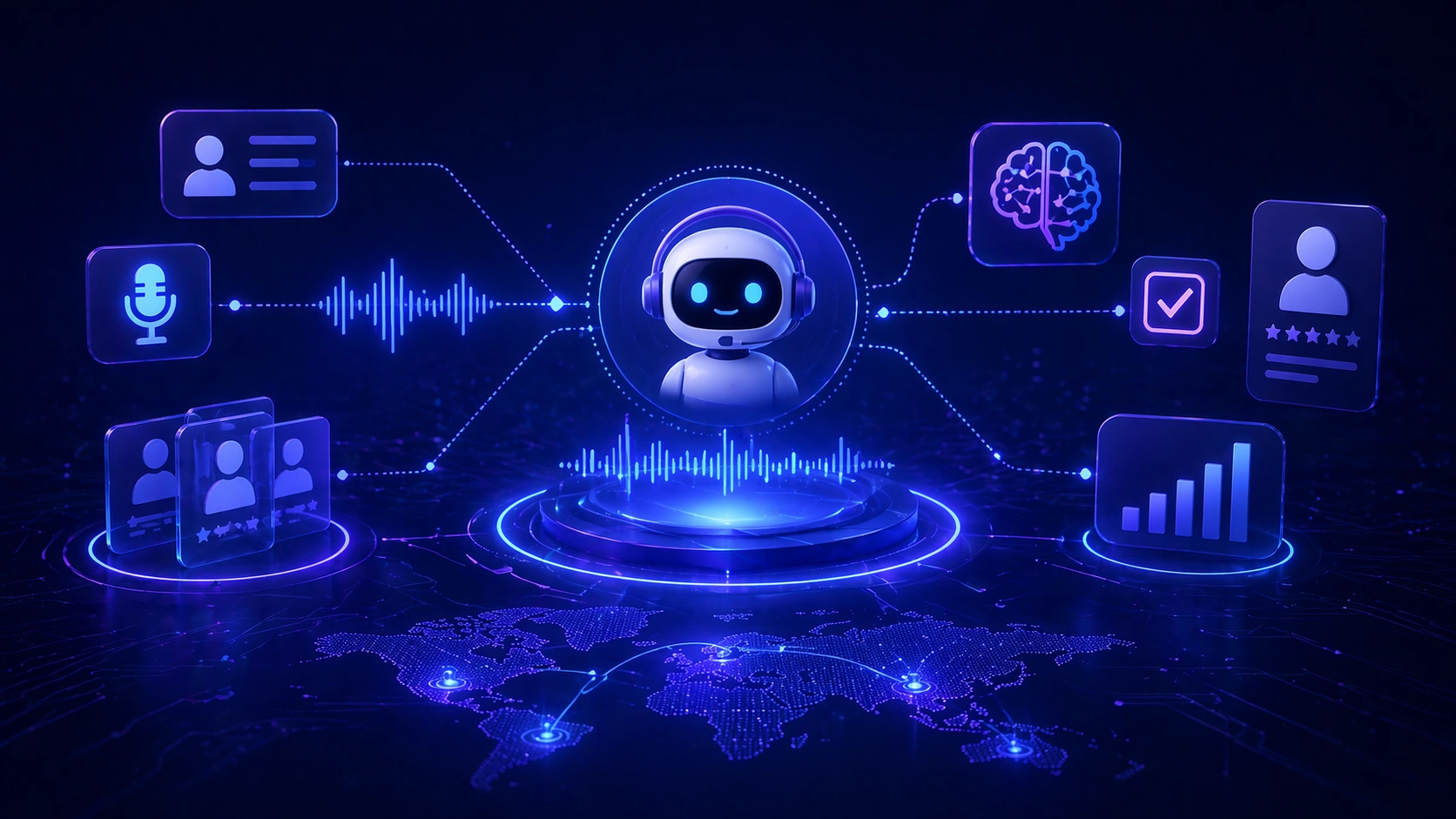
HilDes AI voice interview system illustration featuring autonomous candidate screening, intelligent voice interviews, real-time AI evaluation, hiring automation, and scalable recruitment technology platform.

🏒 Project Overview

HilDes designed and built a fully autonomous AI-powered interview platform that conducts, evaluates, and scores candidates in real time β€” without human intervention.

The system replaces manual screening calls with an intelligent voice-based interview pipeline, capable of handling high-volume candidate assessments simultaneously while maintaining consistency, speed, and objectivity.

Core capabilities:

  • Real-time AI voice interviews
  • Automated question delivery and response handling
  • Intelligent candidate evaluation using AI models
  • Pre-screening and post-interview scoring
  • Concurrent interview session management
🚨 The Challenge

Traditional recruitment workflows are time-consuming, inconsistent, and difficult to scale.

Key problems:

  • Manual interviews limit hiring throughput
  • Inconsistent evaluation across candidates
  • Delays in screening large applicant volumes
  • High operational cost for recruitment teams
  • Lack of structured and comparable candidate data

The client needed a system that could conduct interviews autonomously, evaluate candidates objectively, handle high concurrency, and deliver instant structured results.

🧠 Our Approach

We engineered a real-time AI voice interaction system combining:

  • Speech recognition
  • Conversational AI
  • Telephony infrastructure
  • Real-time processing pipelines

The platform was designed as a fully automated decision-making system, not just a chatbot.

βš™οΈ Infrastructure Transformation

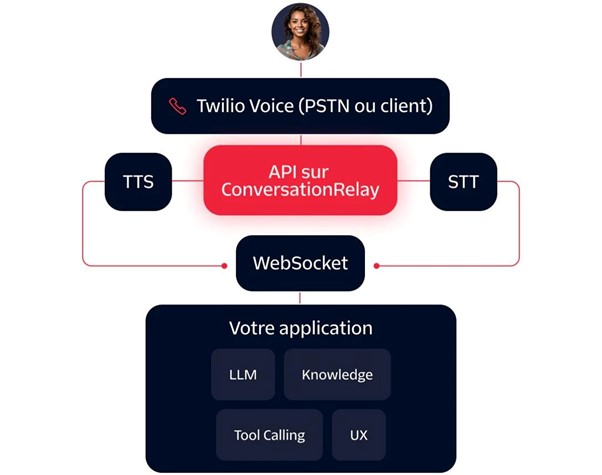
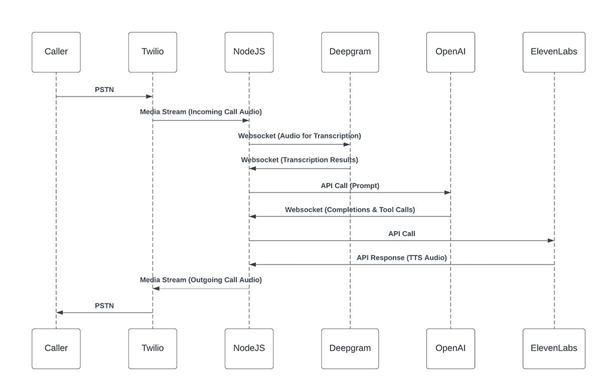
Real-time AI interview flow:


Flow:

  1. Candidate receives or initiates call via Twilio
  2. Voice input processed using Deepgram (STT)
  3. Transcribed text sent to GPT engine
  4. GPT generates next question and evaluates response
  5. Response converted back into voice
  6. Conversation continues dynamically
  7. Final scoring and report generated automatically

πŸ’» Development & Codebase Stabilization

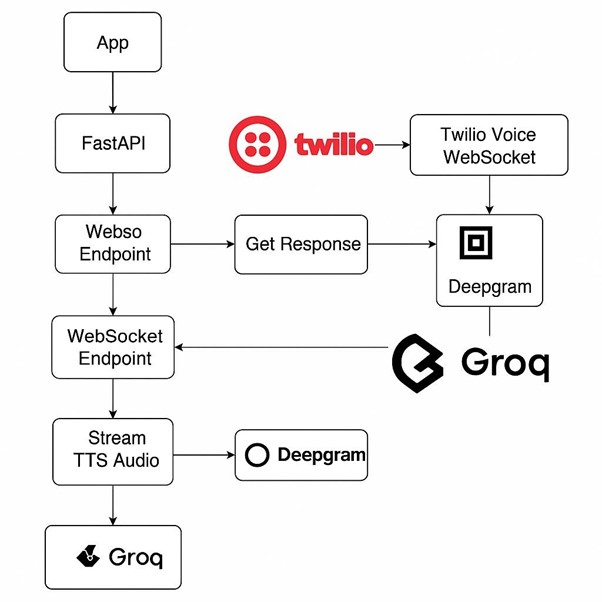
Real-time voice processing technologies:

  • Deepgram (Speech-to-Text)
  • Twilio Voice API
  • WebSockets for real-time streaming

Implementation highlights:

  • Sub-second voice-to-text conversion
  • Continuous streaming of audio data
  • Real-time conversational loop

Impact: natural interactions, no lag in conversation flow, and scalable voice processing.

πŸ” DevOps & CI/CD Implementation

WebSocket-based session management:

  • Real-time session handling using WebSockets
  • Concurrent interview support
  • State management across sessions

Impact: ability to run multiple interviews simultaneously with stable real-time communication and scalable system behavior.

πŸ§ͺ Code Quality & Testing

AI evaluation engine:

  • Powered by OpenAI GPT models
  • Context-aware question generation
  • Dynamic follow-up questions
  • Real-time response analysis

Features:

  • Candidate answer evaluation
  • Scoring based on predefined criteria
  • Context retention across conversation
  • Structured decision-making logic

Impact: consistent evaluation, reduced interviewer bias, and adaptive interviews.

πŸ“Š Process & SDLC Implementation

Pre-interview screening module:

  • Configurable screening criteria
  • Qualification-based filtering
  • Automated eligibility checks

Impact: only relevant candidates proceed, reduced interview load, and faster hiring pipeline.

Post-interview scoring and reporting:

  • Candidate score breakdown
  • Strengths and weaknesses analysis
  • Structured evaluation report
  • Ready-to-use hiring insights

Impact: instant decision-making, data-driven hiring, and standardized comparison.

πŸ” Security & Reliability Enhancements

Decision integrity and reliability controls:

  • Standardized scoring rubric enforcement
  • Structured transcript-based evaluation trails
  • Session-level state controls for interview integrity
  • Repeatable evaluation criteria across all candidates

Impact: stronger process trust, auditability, and dependable autonomous screening operations.

⚑ Performance Optimization

Performance and scalability achievements:

  • Sub-second latency in voice processing
  • High concurrency support
  • Real-time data streaming
  • Horizontally scalable architecture

Result: system can handle large-scale recruitment campaigns without degradation.

🧱 Modernization & Future Scalability

Technology stack:

  • OpenAI GPT
  • Deepgram STT
  • Twilio Voice API
  • WebSockets
  • React.js
  • Node.js

Deliverables:

  • End-to-end AI voice interview platform
  • Real-time voice processing pipeline
  • GPT-powered interview and scoring engine
  • Pre-interview screening module
  • Post-interview evaluation reports
  • WebSocket-based concurrent session system
  • Scalable backend architecture

πŸ“ˆ Final Results

  • Fully automated interview process
  • Massive reduction in hiring time
  • Consistent and unbiased candidate evaluation
  • Ability to conduct interviews at scale
  • Data-driven hiring decisions

πŸ’¬ Client Outcome

The client transformed recruitment from a manual, slow process into a fully automated AI-driven hiring system capable of screening and evaluating candidates at scale with precision and speed.

Discuss Your Project

Share your requirements and our team will get back to you.